New York to Washington, D.C.: Three Good Stops on the I‑95 Corridor
Leaving from somewhere else? Change the start and see your stops right now — your first trip is free, no signup.
About 225 miles from midtown Manhattan to the National Mall in Washington, D.C. — mostly the New Jersey Turnpike and I‑95 — and a drive that can be brisk outside rush hour or painfully slow in it. Here is where we get out: a compact college town perfect for a coffee and a walk, a one-stop center of American history and a market that deserves a real meal, and a pair of Brandywine estates and museums that make a slow last leg worth it.
- ~225 miles · three states (+ DC)
- 4–4.5 hr driving with clear roads; often longer in rush
- I‑95 / New Jersey Turnpike · Delaware Memorial Bridge
- From city skyline and industrial estuaries to leafy campus quads and the Brandywine basin
There are two travel truths about New York to Washington: one, it is short enough that you can do it in a day and long enough that sensible stops matter; two, it is a corridor that will give you whatever mood you ask for — empty interstate speed, or 30 miles of stop-and-go through three metro areas. The usual line is New Jersey Turnpike/I‑95 most of the way. If you want scenery, take back roads around the Brandywine; if you want to avoid toll surprises, leave earlier and work E‑ZPass in. The three stops below work as a single day if you pick two and move briskly, or as a proper two‑day road trip if you want museums and a relaxed dinner.
Out of Manhattan we take the George Washington Bridge or the Lincoln/Queens Midtown tunnels depending on where you start, then the New Jersey Turnpike (I‑95) south. The Turnpike is fast when it is fast and slow when it is slow: traffic by the Meadowlands and around Newark can be stubborn, and the approach to Philadelphia and the I‑95 Delaware crossings always tightens up. Tolls are part of the deal — the New Jersey Turnpike has toll plazas and the Delaware Memorial Bridge is tolled (the bridge toll is collected in the southbound direction). Charge cards and E‑ZPass make the mechanical part painless; the planning part is deciding what to do if the highway decides to make you wait.
Stop 1 — Nassau Street and Princeton University, Princeton, NJ
Mile 52 · about 10 minutes off the Turnpike · 45 minutes to 1 hour
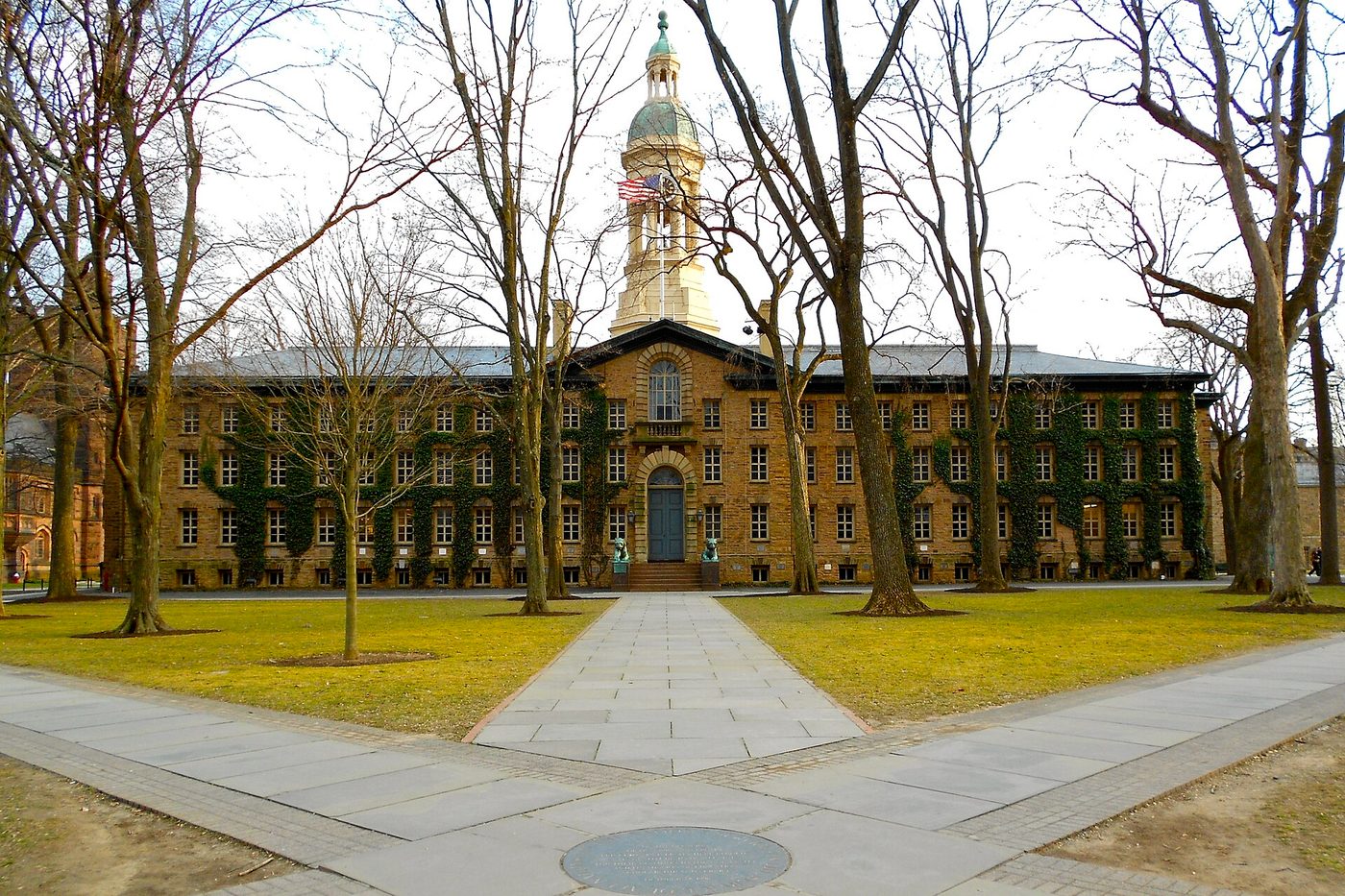
When we want a short, restorative leg with real sidewalks, we get off the Turnpike at exit 8A/9 and take the short drive to downtown Princeton. The university campus is compact and eminently walkable: the red-brick of Nassau Hall and the low, shaded quads make for a good short loop, and Nassau Street — the main drag — is full of coffee shops, a proper bookshop and bakeries. This is the right stop to stretch your legs and have a proper coffee or a sandwich so you can make the longer run south without hitting the first moment of highway hanger.
Park near Witherspoon or pay the meter on Nassau if you are stopping for less than an hour. The town is just the right size: small enough to cover on foot, big enough that you can find a good pastry and a bench. If you have a little more time, the Princeton University Art Museum (small and well curated) is an easy add.
If you have an extra 2 hours: Walk the D&R Canal towpath a few minutes from town, or drive 15 minutes to the grounds of the Princeton Battlefield State Park for a little history and a quiet meadow.
Stop 2 — Independence Mall and Reading Terminal Market, Philadelphia
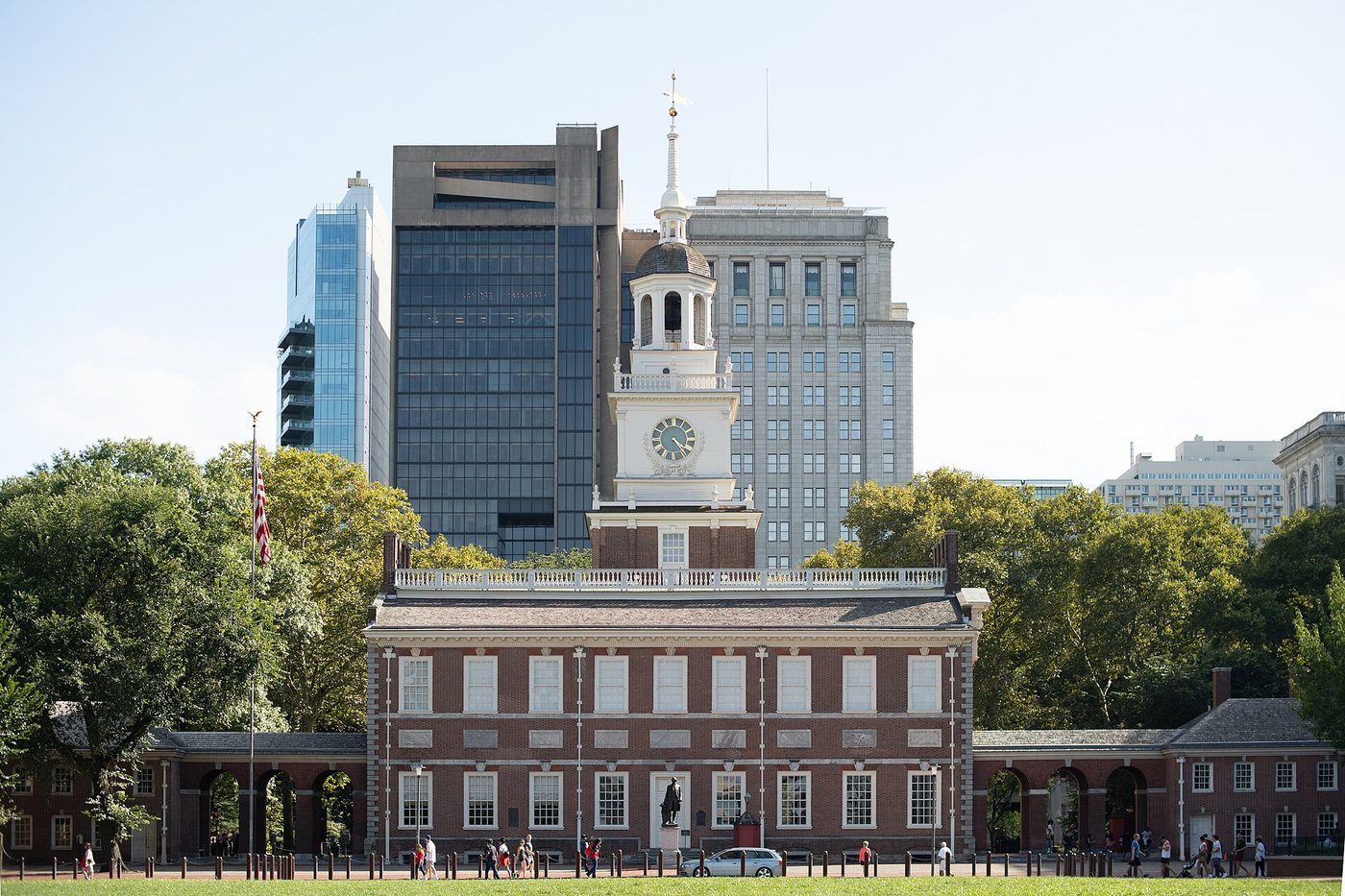
Mile 95 · about 5–10 minutes off I‑95 via I‑676 / Vine Street · 1 to 2 hours
Philadelphia is almost always worth one stop: Independence Hall and the Liberty Bell on the Mall are compact and historically dense, and they sit a short walk from a market you can actually eat under. We time this stop for a serious meal and a proper walk. Independence National Historical Park (the “square mile”) is where the founding documents were debated and signed; the buildings are small, so a focused 45‑ to 60‑minute visit gets you the essentials. Nearby, Reading Terminal Market is exactly what we want for lunch — Amish baked goods, cheesesteaks (if you insist), and markets of every sort under one roof.
Park in one of the Center City garages and walk the Mall; the short masonry courtyards and the old brick streets are far more pleasant on foot than driving. If you plan to see museum exhibitions instead of the quick hit, swap the market for the Philadelphia Museum of Art and the Rocky steps, but that requires more time.
If you have an extra 2–3 hours: Spend the time at the Philadelphia Museum of Art and the nearby Rodin Museum, or take a short hop to the slightly funky Italian Market for a more authentic food walk.
Tell us where you are leaving from, when, and who is in the car — dog, toddler, EV, six‑hour limit — and we will name the stops that actually fit. Your first trip is free, no card.
Stop 3 — Hagley, Nemours and the Brandywine valley, Wilmington
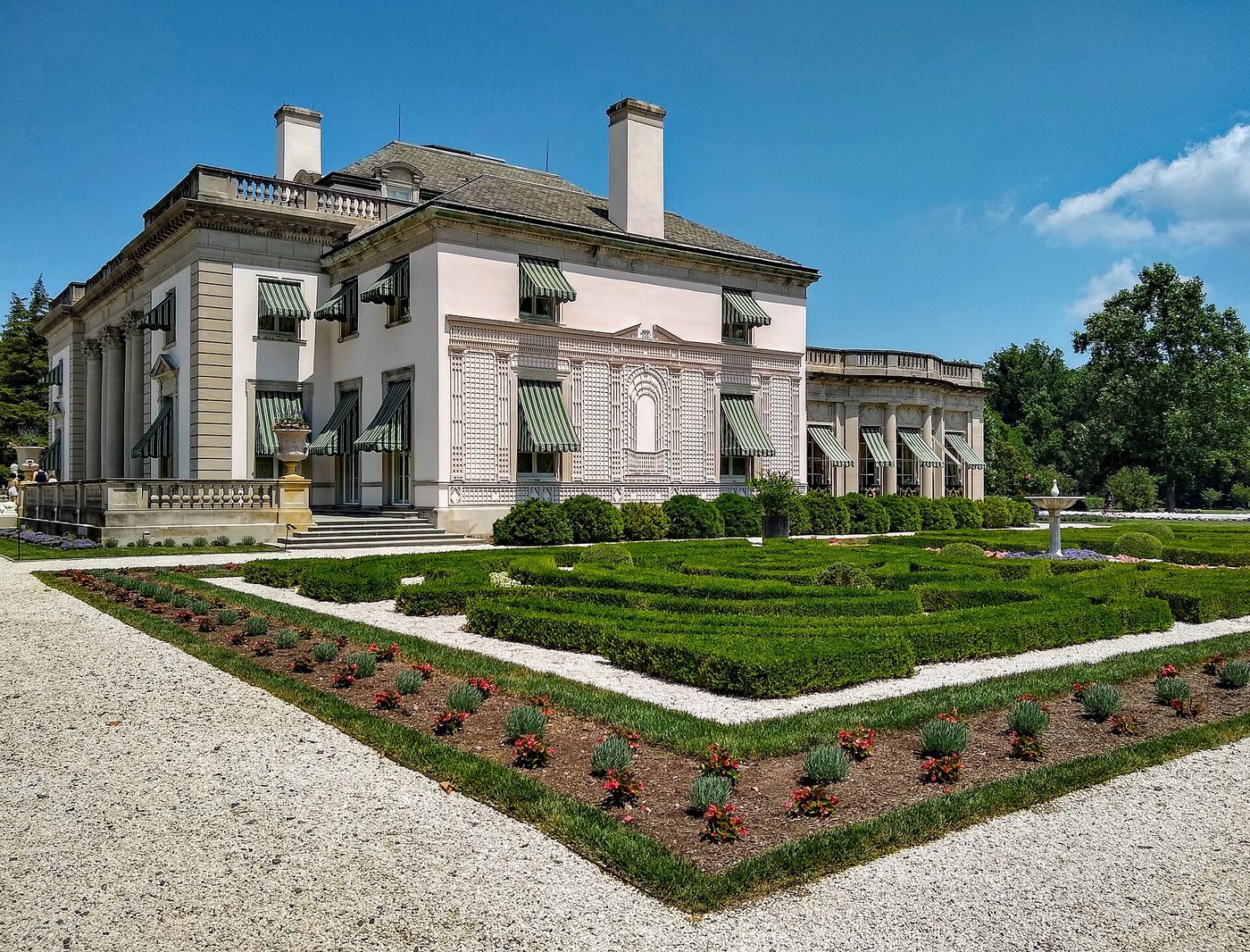
Mile 125 · about 10 minutes off I‑95 · 1 to 2 hours
By the time we reach northern Delaware we like to change gears: the Brandywine country around Wilmington folds some very good small museums and estates into a single pleasant hour or two. Hagley Museum sits on the old DuPont powder‑works on the Brandywine River; it’s part industrial history and part river walk, with machine shops and restored mill buildings that tell the story of early American manufacturing. A few minutes away is Nemours Mansion and Gardens, the du Pont family’s lavish French‑style estate, with formal gardens and a reflecting pool that are worth the short walk and a few photos.
This stop works well late in the afternoon: gardens look good in even light, and the museums are relaxing after the intensity of Philadelphia. There is a small admission at Hagley and at Nemours; check hours because some sites close earlier than big‑city museums.
If you have an extra 2 hours: Add Winterthur Museum and gardens (a 15‑minute drive inland) for a deep collection of American decorative arts and a very large garden complex — it’s a full afternoon if you decide to go in.
Why we put it last: it’s an easy decompression stop before the last hour into Washington — less traffic, more green, and a chance to move from civic history and markets to landscape and quiet museums. If you want to arrive in D.C. at a reasonable hour, Hagley/Nemours gives you the last leg of highway that feels short instead of endless.
Arriving at Washington
From Wilmington it is roughly an hour to the National Mall without heavy traffic. There are two common approaches into the district: I‑95/I‑495 across the Woodrow Wilson Bridge into Virginia and then into the city via I‑395, or I‑95/I‑295 into the east side and over the Sousa Bridge — both funnel into the beltway and then downtown. Expect congestion as you hit the Beltway and again inside the city; leave a cushion for parking and the last‑mile slowdowns.
Washington has a lot of parking rules and expensive garages in the core; for many city‑center plans we prefer parking once and walking or taking a short Metro ride. If you plan museums and the Mall, reserve time to walk: the Smithsonian museums are free and large, and the monuments and memorials are best experienced on foot in late afternoon light. If you want to book tours or timed‑entry attractions in advance, consider book DC attraction passes before you leave for the drive so you don’t have to decide at the toll plaza.
How we would time it
Leave Manhattan by 7:00 if you want to avoid morning rush approaching Newark and to have a relaxed midmorning in Princeton. Coffee and a walk in Princeton at 8:15–9:15, back on the Turnpike by 9:30. Arrive in Philadelphia around 11:30–noon for the market and the Mall and plan to leave by 2:00 or 3:00 to avoid the midafternoon I‑95 pinch. Make Hagley or Nemours a late‑afternoon stop at 4:00–5:00 and aim to arrive in Washington by early evening if traffic cooperates. If you must do the whole route without stops, leave very early (before 6:00) or go late (after 8:30 PM) to miss the worst congestion near the cities.
Booking the rest of it
If you’re renting a car for the corridor, compare offers and look for one with a toll transponder or an EZPass option to avoid surprise bills; compare EconomyBookings and GetRentacar. For lodging, downtown Washington fills quickly around major conferences and Cherry Blossom season in spring, so lock rooms early for those dates. If you prefer to avoid driving entirely, Amtrak’s Northeast Corridor is a strong alternative: faster city‑center to city‑center, no parking, and fewer hassles — but it won’t let you stop and walk Princeton and Hagley in the same way a car does.
Frequently useful planning notes
We usually check live traffic apps for the I‑95 corridor before leaving and again at the Princeton stop; a 30‑minute delay in one spot often means a 45–60 minute detour around the next. Tolls, an E‑ZPass, and a little patience make this one of the most useful short American road trips — you can see three different regional characters in a day.
The three stops on a map
Stops in driving order. Map data © OpenStreetMap contributors.
How far is New York to Washington, D.C. and how long does it take?
About 225 miles from midtown Manhattan to the National Mall and typically 4–4.5 hours of driving without heavy traffic. Allow extra time for rush hours near New York, Philadelphia and the D.C. beltway — that can add one to three hours.
What's the best route to drive between the two cities?
The usual route is I‑95 South via the New Jersey Turnpike, across the Delaware Memorial Bridge and along I‑95 into Maryland and the approaches to Washington. There are occasional detours via I‑295/I‑495 depending on traffic and construction; use live navigation on the day of travel.
Are there tolls and how should I pay them?
Yes. Expect tolls on the New Jersey Turnpike and a toll at the Delaware Memorial Bridge (collected in the southbound direction). E‑ZPass or rental company toll options are the easiest way to avoid mailed invoices — look for a rental with an electronic toll option or bring your own transponder.
Is driving the best way to go, or should I take the train?
If you need flexibility to stop (Princeton, Philadelphia, Wilmington) or are traveling with luggage or a group, driving is convenient. For city‑center to city‑center travel without stops, Amtrak (Northeast Regional or Acela) is faster door‑to‑door and spares you tolls and parking.
Where should we stop for food and gas on the way?
Princeton is a good morning stop for coffee and pastries. In Philadelphia, Reading Terminal Market is ideal for lunch. Fill up before you cross into less populated stretches — northern Delaware and southern Maryland have gas but sometimes at higher prices. For EVs, plan charging stops in Princeton or Philadelphia and check chargers near Wilmington and into the D.C. suburbs.
Now let us do this for your drive
Every stop above is one we would take ourselves — but it is our day, not yours. Change the departure time, the driving limit, the dog in the back seat, the EV that needs a charger every 200 miles, and the right stops change with it. That is the whole thing we built: you tell us the trip, we name the three good stops, with the drive math already done.
Leaving from somewhere else? Change the start and see your stops right now — your first trip is free, no signup.
Seeing your stops is free. The full plan — clock times, weather, what is open when you arrive — is free for your first trip, then 99¢ for three trips or $2.99 a month. If you just want to browse, we have stop-by-stop pages for thousands of routes.
We write one new drive a week — three real towns, the drive math, what we would skip. Leave an email and we will send them as they go up. No more than one a week, unsubscribe in a click.
Updated 2026-10-23. Some links on this page are affiliate links. If you book through one, we may earn a small commission at no extra cost to you. It never changes which stops we pick — no business on this page paid to be here.