Phoenix to Grand Canyon: Three Good Stops on the Way to the South Rim
Leaving from somewhere else? Change the start and see your stops right now — free, no signup.
About 230 miles from central Phoenix to the South Rim entrance at Grand Canyon National Park — mostly up I‑17 to Flagstaff, with obvious and worthwhile detours to the Verde Valley and Sedona. Here is where we get out: a well‑preserved cliff dwelling that’s an easy first stop, the red‑rock views and creekside walk of Sedona, and Flagstaff’s cooler pines and local food before the long stretch into the park.
- ≈230 miles · northern Arizona plateau
- 3 hr 50 min driving with clear roads (allow more in summer weekends)
- I-17 N out of Phoenix · US-180 / AZ-64 into the park
- Sonoran lowland, Verde Valley red rock, ponderosa pine and high desert rim
This drive is one of the cleanest and most rewarding short road trips in the Southwest: a steady climb out of the desert on I‑17, a patchwork of irrigated valleys and volcanic buttes through the Verde, the sudden, bright red cliffs of Sedona, and then the pine‑forested high country around Flagstaff before the last push north to the canyon. The mileage is modest, but the shifting landscapes mean you should plan stops — the view from the rim is best after you’ve let the road out of your legs for a while.
There are two useful approaches: go straight up I‑17 to Flagstaff and on to the South Rim (fast and direct), or pull off for Sedona on AZ‑179 and AZ‑89A, which adds roughly 30–50 minutes depending on how deep into Oak Creek Canyon you go. Either way, Montezuma Castle and the Verde Valley are natural first stops if you want to break the drive early without straying far from the interstate.
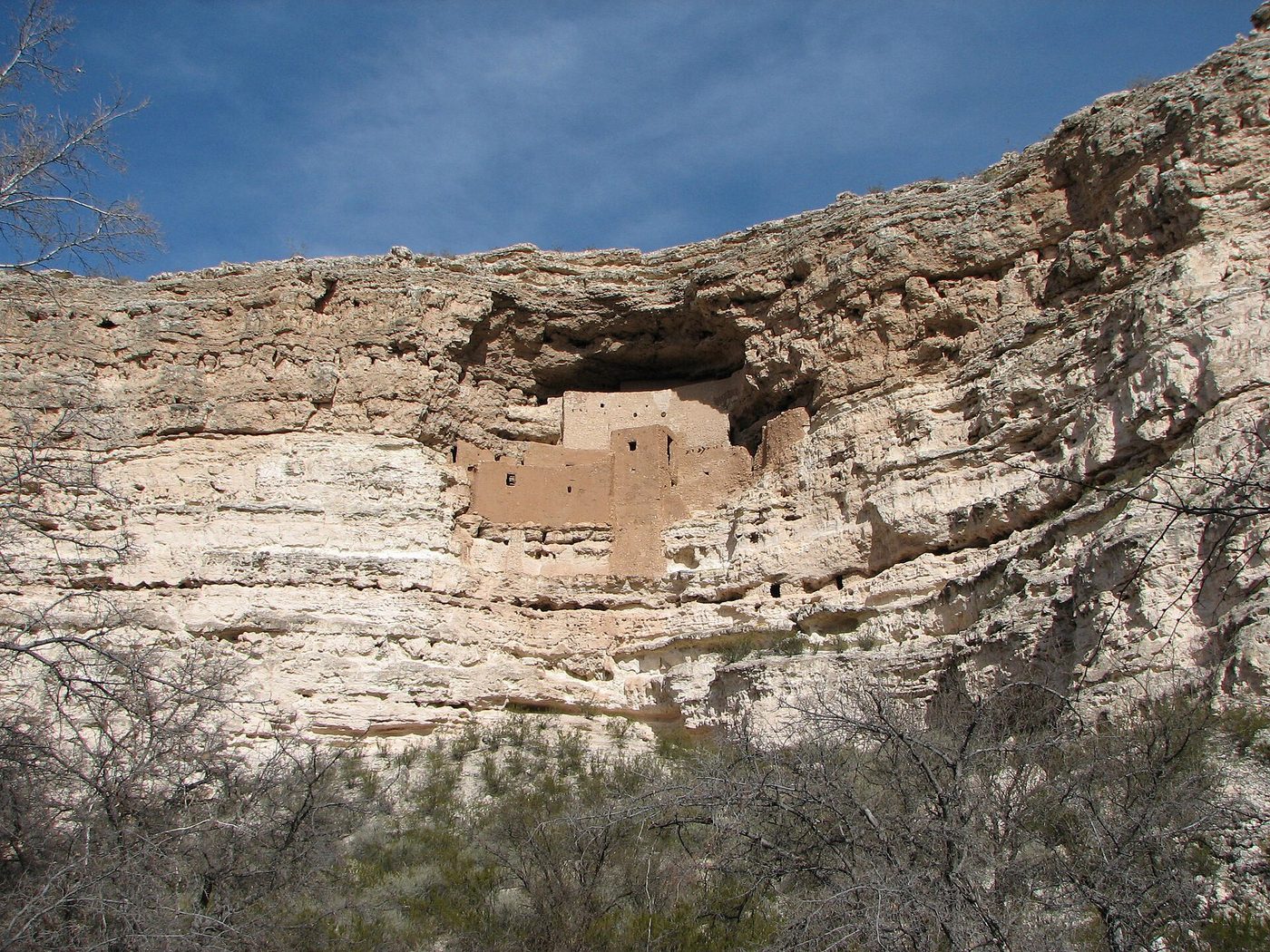
Stop 1 — Montezuma Castle National Monument, Camp Verde
Mile 85 · about 5 minutes off I‑17 · 30 to 45 minutes
Roughly an hour to an hour and a quarter out of Phoenix, Montezuma Castle sits on a low limestone cliff above a perennial creek in the Verde Valley. The Sinagua people built these well‑preserved cliff dwellings more than 700 years ago; the five‑story masonry rooms are set into a shallow alcove and are easy to view from the paved trail without strenuous hiking.
It’s the sort of stop we make early in the drive: short, shaded paths, interpretive panels that give the place context, and a picnic area if you want to stretch your legs. The monument is compact and designed for a quick visit—no climbing down into the ruins—so it’s ideal for families and anyone wanting to break the highway monotony.
If you have an extra 1–2 hours: drive a few miles farther into the Verde Valley — the town of Cottonwood has small tasting rooms and a walkable old town, and nearby Tuzigoot National Monument (a short climb) gives a larger hilltop ruin with views over the valley.
Stop 2 — Sedona: Oak Creek Canyon and the Red Rocks
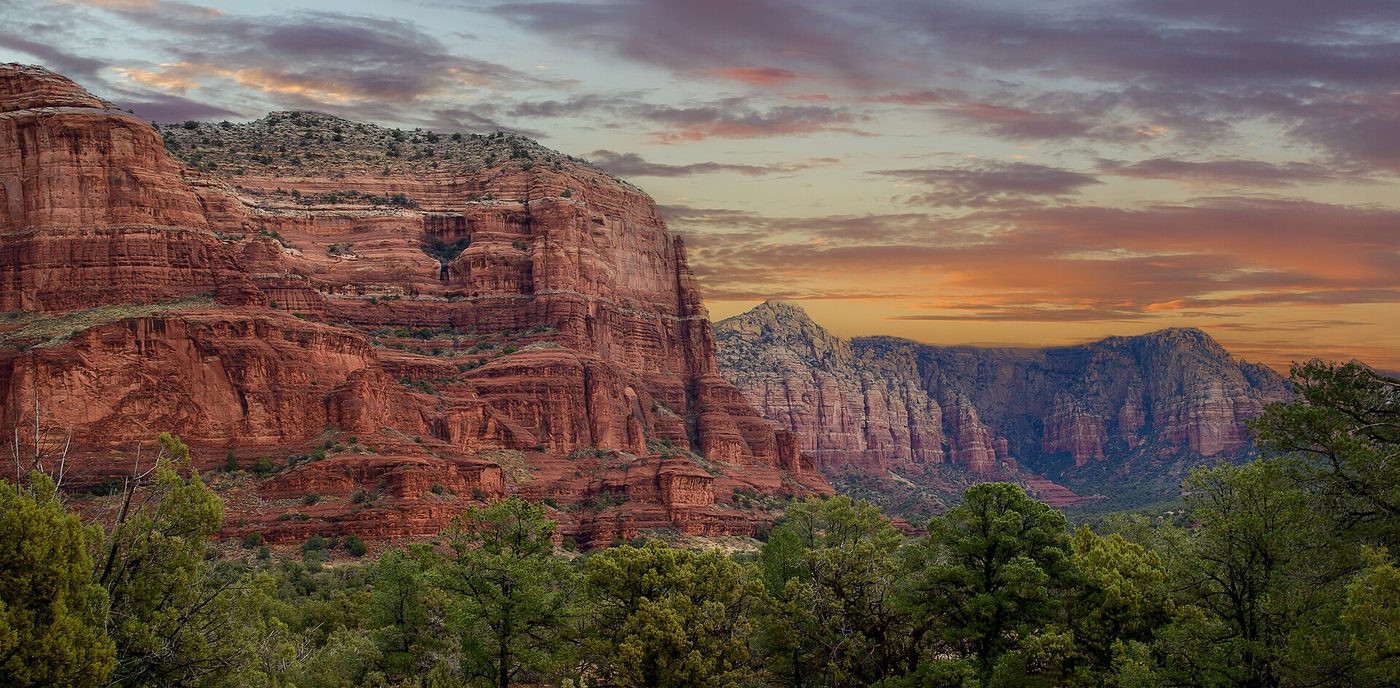
Mile 115 · 12–20 minutes off I‑17 via AZ‑179 · 1 to 2+ hours
Sedona is the reason many people take the scenic route. AZ‑179 — the Red Rock Scenic Byway — sweeps you into a red‑stone amphitheater: roadside pullouts (Bell Rock, Courthouse Butte, Airport Mesa) offer instant, dramatic views and short walks. Oak Creek Canyon, the green slot that divides the red rocks, runs north of town and has picnic areas and creekside paths that feel unexpectedly cool after the desert below.
This is where we slow down for lunch and a proper look: a cafe in town, a hike to a viewpoint, or the Oak Creek picnic areas if you want shade and water sounds. Traffic can be slow on weekends and in shoulder seasons when leaf color or mild weather brings crowds — plan on more time for parking in the busiest spots.
If you have an extra 3 hours: take the 89A switchbacks through Oak Creek Canyon toward Jerome and Cottonwood for a loop back to I‑17, or hike one of Sedona’s longer trails such as Fay Canyon or Cathedral Rock (both moderate, stunning climbs).
Tell us where you are leaving from, when, and who is in the car — dog, toddler, EV, six-hour limit — and we will name the stops that actually fit. Your first trip is free, no card.
Stop 3 — Flagstaff: downtown, pine roads, and Lowell Observatory
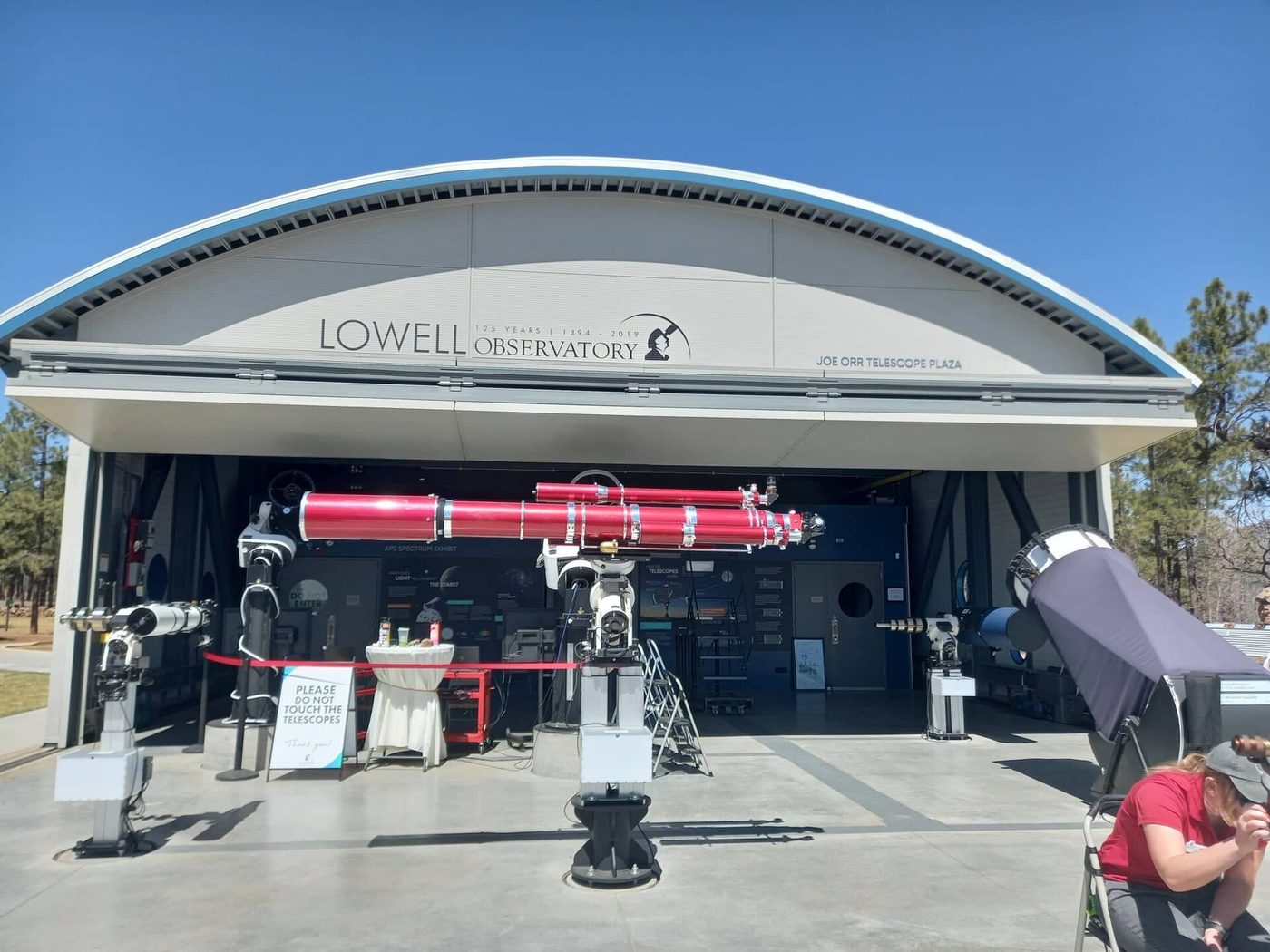
Mile 165 · about 5–10 minutes off I‑17 · 45 minutes to 1 hour (longer if you visit a museum)
Flagstaff is the last big town before the South Rim and the sensible place to re‑set. The elevation is a thousand feet or more above Sedona and the temperature drops; pine trees and Route 66 nostalgia replace red rock vistas. We like to park in the walkable downtown, grab coffee or a hearty lunch, and walk to Heritage Square or along historic railroad Avenue. If you’re into science or want to kill a few hours under a planetarium or an old observatory dome, Lowell Observatory on Mars Hill is a compact, fascinating stop with daytime programs and evening stargazing sessions on busy nights.
Flagstaff is also an important last stop for supplies: gas, any groceries you want inside the park, and a final chance at restaurants with fuller hours than the park gateway town of Tusayan. If your plan is to arrive at the rim in daylight and hike a short section, make sure you’ve topped off the tank and picked up water here.
If you have an extra 2 hours: swing east of town to Walnut Canyon National Monument for a short rim trail and cliff dwellings higher than Montezuma Castle, or visit the Museum of Northern Arizona for regional geology and Indigenous collections.
Arriving at Grand Canyon
From Flagstaff the road climbs and then runs west and north into the Kaibab Plateau; US‑180 and AZ‑64 meet and carry you into Grand Canyon National Park near Grand Canyon Village and the South Rim visitor areas (Mather Point, the Visitor Center, Bright Angel Trailhead). Allow time for park entry: there is an entrance fee per vehicle, and in busy months the line can add 15–45 minutes at the gate. If you arrive late in the day, many people park in the Village and walk out to Mather Point for evening light — the rim views are immediate and arresting without any serious walking required.
Once inside the park there are shuttle options on the South Rim if you prefer not to move your car; the Rim Trail is flat and paved for long stretches, making short, memorable walks accessible to everyone. For guided interpretive walks and paid tours, consider booking ahead (book Grand Canyon tours and guided trips ahead) or download a self‑guided audio walk to play as you move between viewpoints (self-guided audio for the South Rim).
How we would time it
Leave Phoenix around 7:00. Stop at Montezuma Castle around 8:15 for 30–40 minutes and a coffee refill. Back on I‑17 and into Sedona by 10:30 for a viewpoint loop and an early lunch — plan 1½ to 2 hours if you want a short hike. Leave Sedona by 1:00, roll into Flagstaff by 2:15 for a late afternoon walk, quick museum or observatory visit if you like, and gas up. Head out to the South Rim by 3:30 and arrive at Grand Canyon Village in time for sunset (about 4:30–5:30 depending on season). If you prefer to enter the park fresh in the morning, skip Sedona or make it a very early stop and spend the night in Flagstaff.
Booking the rest of it
Flying into Phoenix Sky Harbor gives you the most rental options and generally the best prices; one‑way rentals to airports near the canyon can be expensive, so many people do a round trip or return the car in Phoenix. Compare EconomyBookings and GetRentacar for a quick sense of prices. Lodging inside the park (Grand Canyon Village) and in nearby Tusayan fills up months ahead for summer and holiday weekends, so if your trip is fixed-date, lock a room early. For guided canyon hikes, bus tours, or mule trips, book in advance — the park limits some activities and they sell out.
Why we put Flagstaff last
Flagstaff is the natural last stop because it is the last full‑service town before the South Rim: restaurants, gear, and gas. It also gives a change of scenery — from red rock to pine forest — right before the final coastal‑like drop into the canyon’s rim environment. If you’re timing to watch the sunset, Flagstaff lets you arrive at the rim rested and with daylight to spare.
The three stops on a map
Stops in driving order. Map data © OpenStreetMap contributors.
How far is Phoenix to the Grand Canyon and how long does it take?
Roughly 230 miles and about 3½ to 4 hours of driving to the South Rim (Grand Canyon Village) from central Phoenix on I‑17 and US‑180/AZ‑64. Allow extra time for stops, traffic through Sedona, and possible entrance‑gate lines.
Should I go through Sedona or take the direct I‑17 route?
Go through Sedona if you want dramatic red‑rock viewpoints and creekside walks — it adds roughly 30–50 minutes depending on parking and how far into Oak Creek Canyon you go. Take I‑17 straight to Flagstaff if you prefer a faster, more direct run to the canyon.
Where should I fill up with gas?
Flagstaff is the last major town with full‑service stations before the South Rim; you can top up in Cottonwood or Sedona but prices and hours vary. Fill the tank in Flagstaff if you plan to do rim hikes or stay in the park overnight.
Do I need to book Grand Canyon tours or lodging in advance?
Yes. Park lodging, popular guided hikes, mule trips and some ranger programs can sell out months in advance for summer and holiday weekends. If you want a specific tour or an inside‑park room, book as early as possible.
What’s the best time of day to arrive at the rim?
Late afternoon into early evening is excellent for softer light and fewer daytime crowds; sunrise is also spectacular but requires an early start and colder temperatures. If you want to enter the park the same day, avoid mid‑morning on summer weekends when gate queues are most likely.
Now let us do this for your drive
Every stop above is one we would take ourselves — but it is our day, not yours. Change the departure time, the driving limit, the dog in the back seat, the EV that needs a charger every 200 miles, and the right stops change with it. That is the whole thing we built: you tell us the trip, we name the three good stops, with the drive math already done.
Leaving from somewhere else? Change the start and see your stops right now — free, no signup.
Seeing your stops is free. The full plan — clock times, weather, what is open when you arrive — is free for your first trip, then 99¢ for three trips or $2.99 a month. If you just want to browse, we have stop-by-stop pages for thousands of routes.
We write one new drive a week — three real towns, the drive math, what we would skip. Leave an email and we will send them as they go up. No more than one a week, unsubscribe in a click.
Updated 2026-10-12. Some links on this page are affiliate links. If you book through one, we may earn a small commission at no extra cost to you. It never changes which stops we pick — no business on this page paid to be here.