Seattle to Portland: Three Good Stops
Leaving from somewhere else? Change the start and see your stops right now — free, no signup.
About 175 miles straight down I-5 and the most-driven corridor in the Pacific Northwest — three hours if the traffic behaves, five if it does not. Almost everyone treats it as dead time between two good cities. Here is where we get out: a glass furnace on a waterfront, a volcano that took the top off itself, and a fur-trade fort inside the city limits.
- 175 miles
- 3 hr driving
- I-5 S · WA-504 spur
- Doable in one long day, better with a night in Tacoma or Castle Rock
There is only one sensible road between these two cities, and everybody is on it. I-5 carries commuters, freight and every weekend trip in western Washington at once, so the number that matters is not the mileage but the hour you leave. Southbound out of Seattle is bad from 3pm to 7pm on weekdays and bad again on Friday afternoons all the way to Olympia; the Tacoma stretch past the Dome and the JBLM army base south of Lakewood is where it reliably stops. Leave before 9am or after 7pm and the same drive costs you two hours less.
The weather is the other variable. This is a wet corridor — the low cloud sits at about 1,500 feet for much of the winter, which means the two mountains this drive is famous for are simply not there. If seeing St. Helens matters to you, check the webcams before you commit to the 100-mile round-trip spur, because the observatory road is the one part of this trip that is genuinely worth turning back from on a grey day.
One practical note on fuel: Oregon and Washington both allow self-service now, so the old warnings about attendants pumping for you in Oregon are out of date. Gas is usually a little cheaper on the Washington side, and Washington has no income tax while Oregon has no sales tax — so buy fuel north of the river and anything expensive south of it.
Stop 1 — Museum of Glass and the Bridge of Glass, Tacoma
Mile 33 · exit 133 off I-5 · 1 to 2 hours
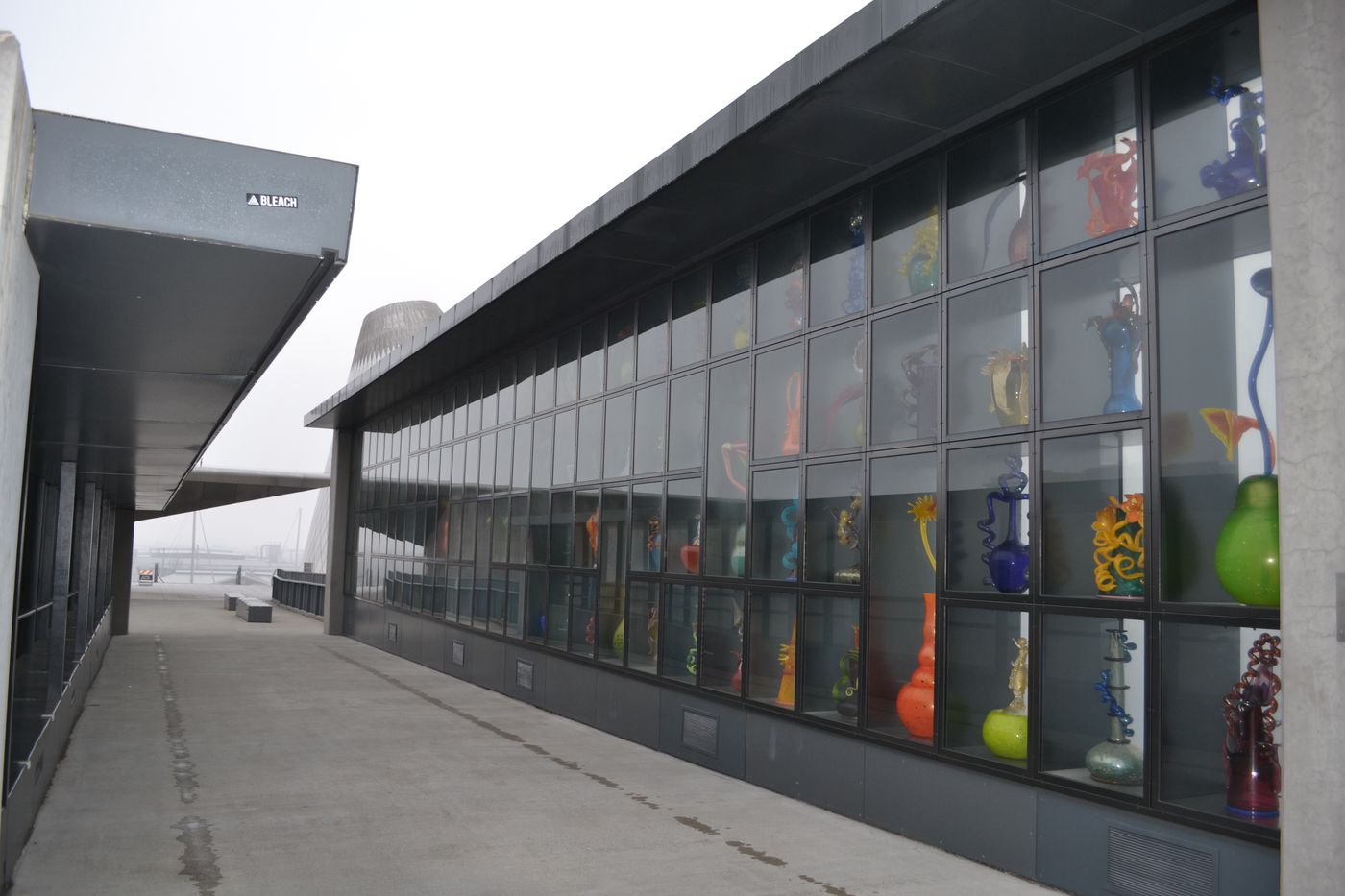
Thirty-five minutes out of Seattle, on a rebuilt stretch of Thea Foss Waterway, sits a 90-foot steel cone with a live glass furnace inside it. The Hot Shop Amphitheater is the reason to stop: banked seating around a working team of glassblowers, with a narrator explaining what they are doing while they do it, and a piece taking shape over the course of an afternoon. It is the rare museum exhibit that is different every single day.
Outside, the Bridge of Glass crosses I-705 back towards downtown and is free at any hour — Dale Chihuly grew up in Tacoma, and this is 500 feet of his work overhead and in lit cases beside you. Walk it even if you skip the museum. At the far end you are already at the Washington State History Museum and Union Station, whose rotunda holds more Chihuly and costs nothing to look at.
Why we put it first: the furnace runs to a schedule and it is dark on some weekdays, so check the day's hot shop hours before you plan around it — book the Tacoma and Portland museum tickets ahead. If you would rather be outside, swap in Point Defiance Park five miles north: 700 acres of old-growth Douglas fir, a five-mile loop drive, and a view across to the Olympics that explains the whole region in one glance.
Stop 2 — Mount St. Helens, from Castle Rock
Mile 105 · exit 49, then WA-504 east · 2 hours to most of a day
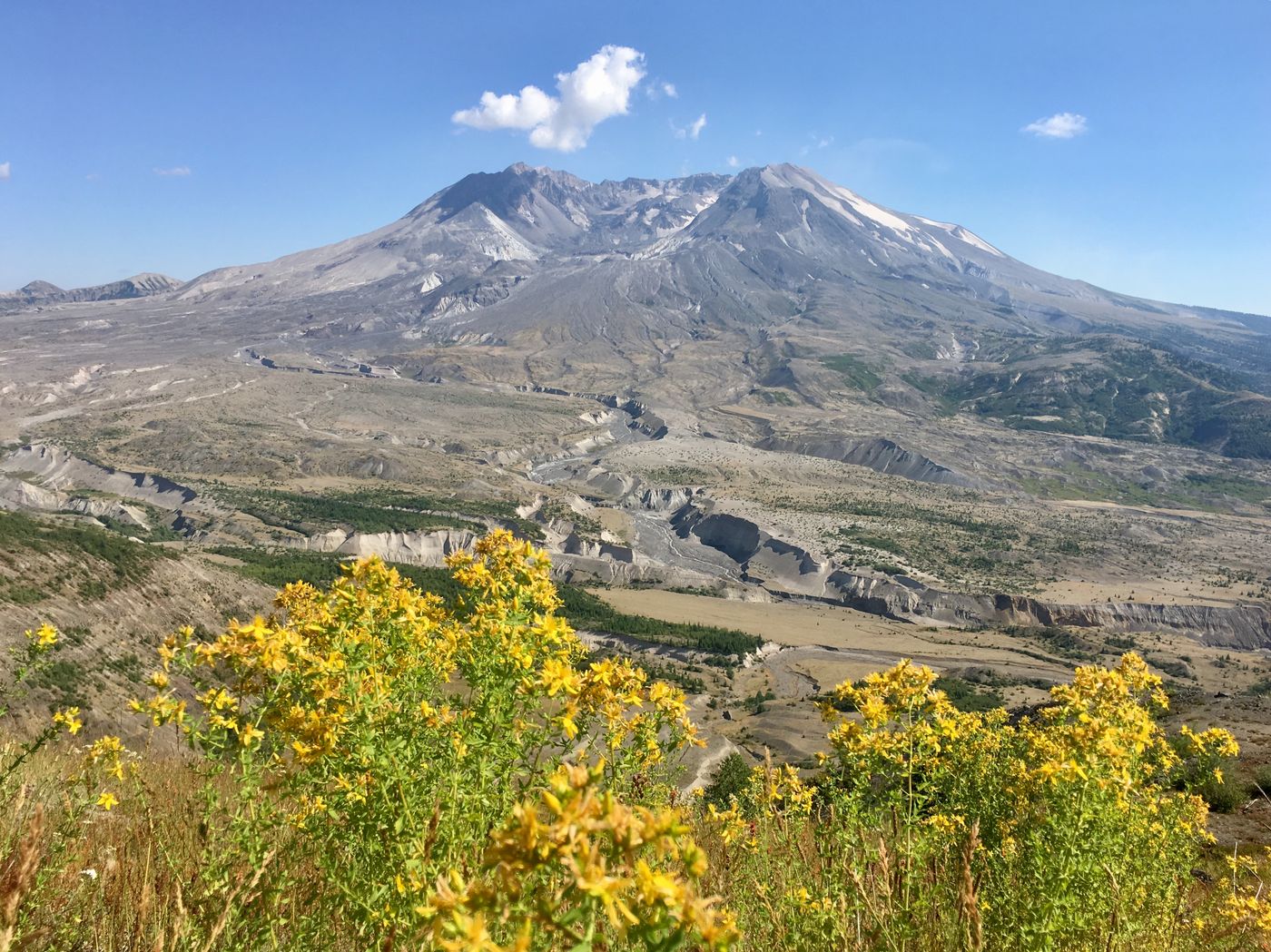
Halfway down, at Castle Rock, a two-lane road turns east and climbs towards the volcano that removed 1,300 feet of its own summit on 18 May 1980 and flattened 230 square miles of forest. Nothing else on this corridor comes close.
How far up you go is the decision. Five miles from the interstate, the Mount St. Helens Visitor Center at Silver Lake is the low-commitment version: a walk-through model of the volcano you can stand inside, eyewitness accounts, a boardwalk over the lake and a straight view up the valley to the crater on a clear day. Budget an hour and you are back on I-5 having actually seen the mountain.
The full version continues up WA-504 towards the blast zone and the ridges facing the crater, and it is spectacular — but it is 52 miles each way from I-5, seasonal, and subject to closures and landslide damage that have repeatedly cut the last stretch of road in recent years. Check the Forest Service road status and which visitor centres are open the morning you drive, rather than trusting a guide of any kind, including this one. If the upper road is shut, the Silver Lake centre plus the Hoffstadt Bluffs viewpoint is still a good half-day.
Tell us where you are leaving from, when, and who is in the car — dog, toddler, EV, six-hour limit — and we will name the stops that actually fit. Your first trip is free, no card.
Stop 3 — Fort Vancouver National Historic Site
Mile 165 · exit 1C off I-5 · 1 to 2 hours
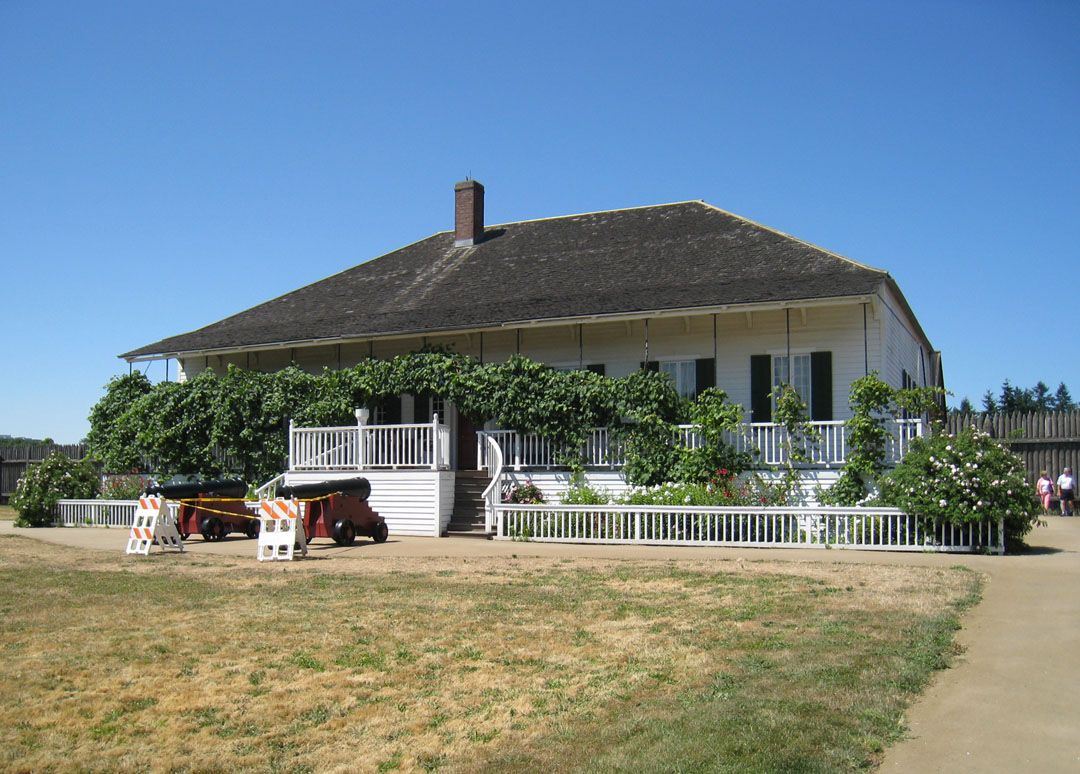
Ten minutes short of the Columbia River bridge, in Vancouver, Washington, is the reconstructed Hudson's Bay Company post that ran the fur trade across the entire Pacific Northwest from 1825. This was the region's supply depot, courthouse and social centre decades before Seattle or Portland existed, and the rebuilt stockade sits on the excavated footprint with a blacksmith, a carpenter, a bakery and the chief factor's house furnished as it was.
Around it is the wider reserve: the 1849 army barracks and the officers' row of houses along Evergreen Boulevard, Pearson Field — one of the oldest operating airfields in the country — and a big open green that locals use as a park. There is a modest per-adult entry fee for the stockade and the grounds are free.
It is also, practically, the last easy stop before you are in Portland traffic. The I-5 bridge over the Columbia is a 1917 lift span that still opens for river traffic and still backs up in both directions at rush hour; if you hit it badly, I-205 to the east is the escape route. Once across, Portland's short list is the Japanese Garden and the Rose Garden in Washington Park, Powell's, and the drive out the Historic Columbia River Highway to Multnomah Falls — which is a different trip and deserves its own day. An self-guided audio tour for the I-5 corridor covers the corridor's fur-trade and eruption history better than the signage does.
How we would time it
One long day: leave Seattle at 7:30am, Tacoma glass at 9, Silver Lake by noon, Fort Vancouver mid-afternoon, into Portland for dinner. The better version is two days with a night in Castle Rock or Kelso: Tacoma and Olympia on the first afternoon, then the full WA-504 run up towards the crater the next morning when the light is on the mountain and the cloud has not built yet, arriving in Portland in the evening.
If you are travelling with someone who does not want to drive this at all, Amtrak's Cascades runs the same corridor in three and a half hours and both downtowns are walkable — but you get none of these three stops, which is rather the point.
Booking the rest of it
Most visitors fly into Seattle–Tacoma and drive one way, dropping the car in Portland. One-way fees between these two cities are usually reasonable because rental fleets move constantly along this corridor, but compare EconomyBookings and GetRentacar before you book and check the drop-off charge explicitly. Any normal car does this route; if you are in an EV, I-5 is one of the best-charged highways in the country, though the WA-504 spur has nothing at the top — charge in Castle Rock before you go up.
The three stops on a map
Stops in driving order. Map data © OpenStreetMap contributors.
How long is the drive from Seattle to Portland?
About 175 miles and three hours on I-5 with no stops. Allow four to five if you leave Seattle between 3pm and 7pm on a weekday or on a Friday afternoon — the Tacoma and JBLM stretches are where it stops.
What are the best stops between Seattle and Portland?
The Museum of Glass and free Bridge of Glass in Tacoma, Mount St. Helens on the WA-504 spur from Castle Rock, and Fort Vancouver National Historic Site just before the Columbia River bridge.
Is Mount St. Helens worth the detour from I-5?
Yes on a clear day. The visitor center at Silver Lake is only five miles off the interstate and gives you the view and the story in an hour. The road up towards the crater is 52 miles each way, seasonal, and has had repeated closures — check the Forest Service status the morning you drive.
Should you drive or take the train from Seattle to Portland?
The train is about three and a half hours and both downtowns are walkable, so it wins if you only want the two cities. Drive if you want the corridor itself — Tacoma, the volcano and Fort Vancouver are unreachable without a car.
Now let us do this for your drive
Every stop above is one we would take ourselves — but it is our day, not yours. Change the departure time, the driving limit, the dog in the back seat, the EV that needs a charger every 200 miles, and the right stops change with it. That is the whole thing we built: you tell us the trip, we name the three good stops, with the drive math already done.
Leaving from somewhere else? Change the start and see your stops right now — free, no signup.
Seeing your stops is free. The full plan — clock times, weather, what is open when you arrive — is free for your first trip, then 99¢ for three trips or $2.99 a month. If you just want to browse, we have stop-by-stop pages for thousands of routes.
We write one new drive a week — three real towns, the drive math, what we would skip. Leave an email and we will send them as they go up. No more than one a week, unsubscribe in a click.
Updated 2026-09-14. Some links on this page are affiliate links. If you book through one, we may earn a small commission at no extra cost to you. It never changes which stops we pick — no business on this page paid to be here.