Houston to Austin: Three Good Stops on the Way
Leaving from somewhere else? Change the start and see your stops right now — your first trip is free, no signup.
About 165 miles from downtown Houston to downtown Austin — most people drive it in under three hours on US-290 or the I-10/71 combo. Here is where we get out: a classic Texas creamery and its lively small-town center, the riverside spot where Texas declared independence, and a piney-state-park leg-stretch just before Austin.
- ~165 miles · single-day drive
- About 2 hr 45 min driving with clear roads
- US-290 W is the direct route; TX-71/I-10 is the faster-highway alternative
- Gulf Coast plain to the rolling Texas Hill Country
This is one of the most straightforward road trips in Texas — mostly highway, short enough that you can do it as a day trip but long enough that good stops make the difference between a dull commute and a proper drive. Route choices matter for character: US-290 (the old Highway 290 corridor) passes through Brenham and the farm country where bluebonnets show off in spring; the I-10/TX-71 combination keeps you on faster roads and brings you through La Grange and Bastrop before you hit Austin. Both get you into town in roughly the same time under normal traffic, but we pick stops that make either route feel like a trip.
Practical note: there is more services and bigger towns on the US-290 route heading northwest out of Houston; if you want predictable gas and food stops, stick with US-290. If you are trying to avoid weekend traffic on 290 or you prefer a steady speed, take I-10 west to TX-71 north and approach Austin from the southeast through Bastrop. Either way, aim to miss Houston morning rush hours and Austin evening rush hours if you can — that will change a two-and-a-half-hour drive into three-plus in minutes.
Stop 1 — Blue Bell Creameries and Downtown Brenham
Mile 80 · about 10 minutes off US-290/I-10 · 45 minutes to 1 hour
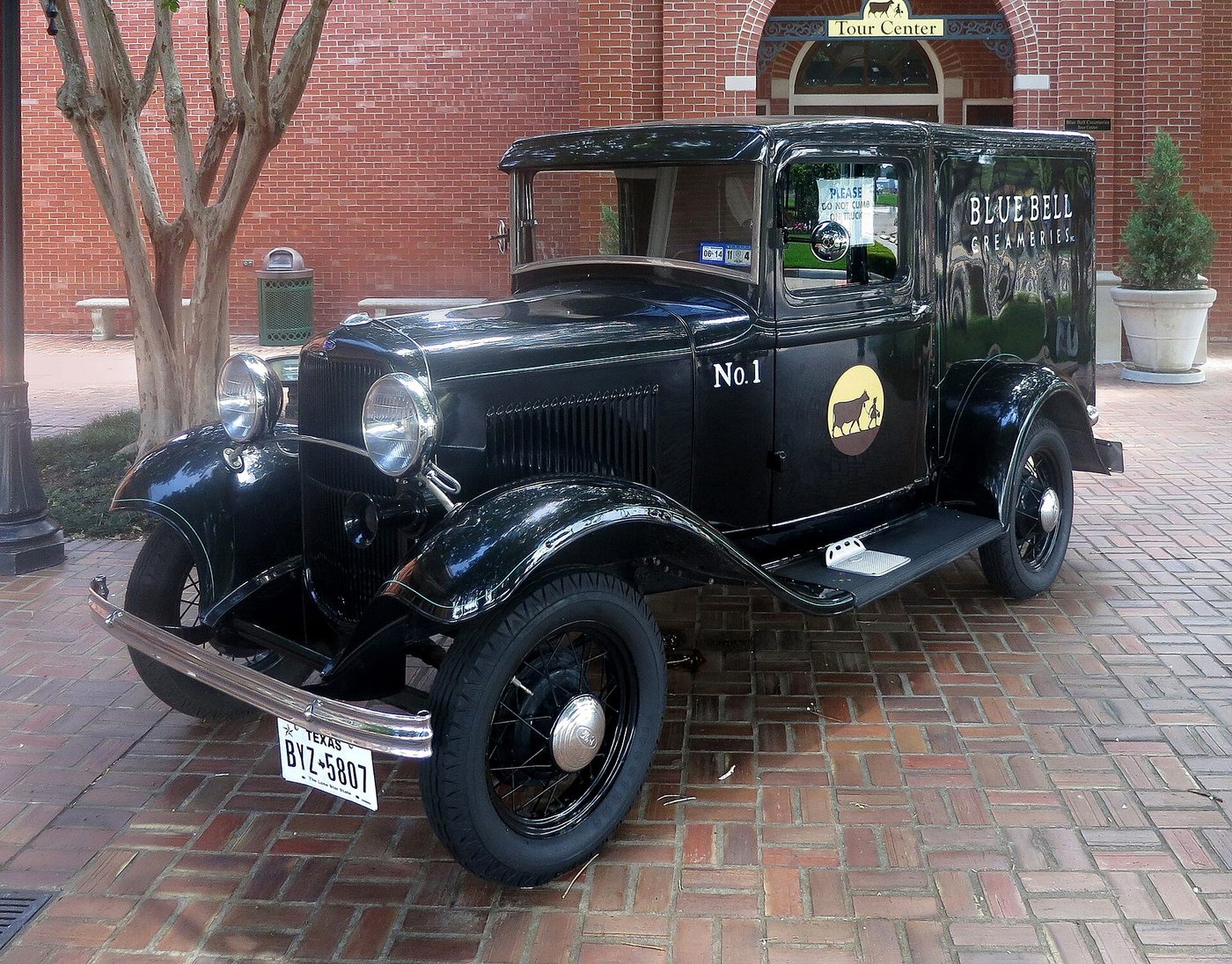
Here is where we get out for something everyone in Texas recognizes: Blue Bell Creameries in Brenham. The visitor area and country store are a short turn from US-290, and they are the kind of stop that turns a three-hour drive into an occasion. There’s usually a sample or two, ice cream by the scoop, and the country-store shelves are stacked with local jams and souvenirs. It’s an easy first stop — kids and adults both appreciate it, and it’s one of the reliable coffee-and-snack breaks on the route.
Downtown Brenham is a block or two away from the creamery turnoff and worth a quick walk if you have time. The main square shows one of those small Texas downtowns that still feels active: bakeries, a couple of good coffee shops, barbecue and antique stores. If we are making a longer stop, we park the car and walk the square for thirty minutes; window-shop, grab lunch at a small café, and maybe refill the ice chest with a pint for later.
If you have an extra 2 hours: head a few miles south to Chappell Hill on the back roads. In bluebonnet season the country lanes between Brenham and Chappell Hill are famously pretty, and the small-town antique shops there are excellent for a slow wander.
Stop 2 — Washington-on-the-Brazos State Historic Site
Mile 95 · about 6 minutes off US-290 · 45 minutes to 1 hour
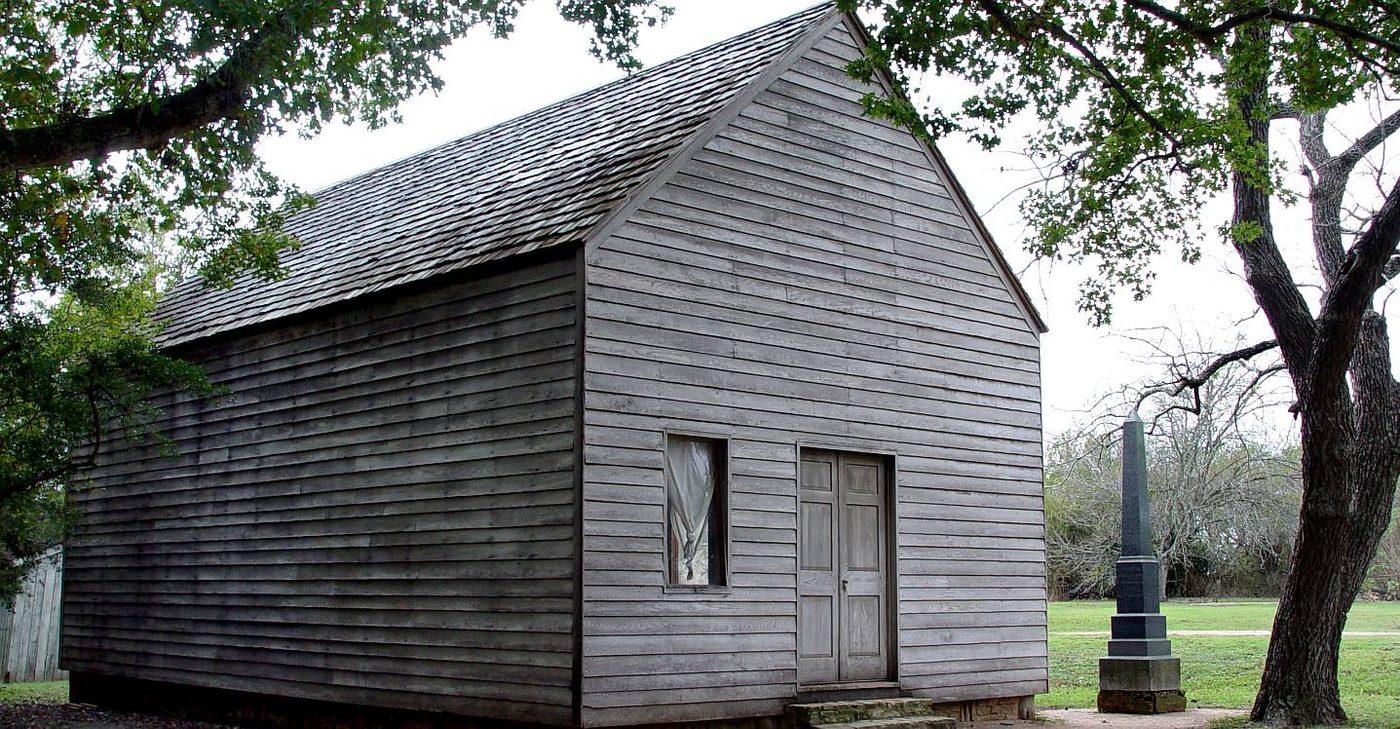
For a real change of scene — and for something you can’t do in either city — turn off toward the Brazos River and the place Texans call the birthplace of the republic. Washington-on-the-Brazos State Historic Site sits on a lovely stretch of river and recreates the setting where delegates gathered in 1836 to debate and sign the Texas Declaration of Independence. The site includes a reconstruction of Independence Hall, the Star of the Republic Museum, and grounds that are pleasantly shaded for a walk.
This is the kind of stop that cuts the highway tension: there are interpretive panels, old oaks, a riverside walk and — in good weather — picnic tables. It’s a quiet place to stretch legs and to give kids something tangible to explore besides digital screens. We take 45 minutes to an hour here: read a bit in the museum, walk down to the river and sit for a moment. It’s educational without being museum-heavy, and it’s one of those stops that turns a line on a map into a place you remember.
If you have an extra 90 minutes: add the nearby Barrington Living History Farm for a short hands-on look at mid-19th-century farm life — rotating demonstrations and period buildings make it a low-effort addition for curious travelers.
Tell us where you are leaving from, when, and who is in the car — dog, toddler, EV, six-hour limit — and we will name the stops that actually fit. Your first trip is free, no card.
Stop 3 — Bastrop State Park
Mile 145 · about 10 minutes off TX-71 · 45 minutes to 1 hour
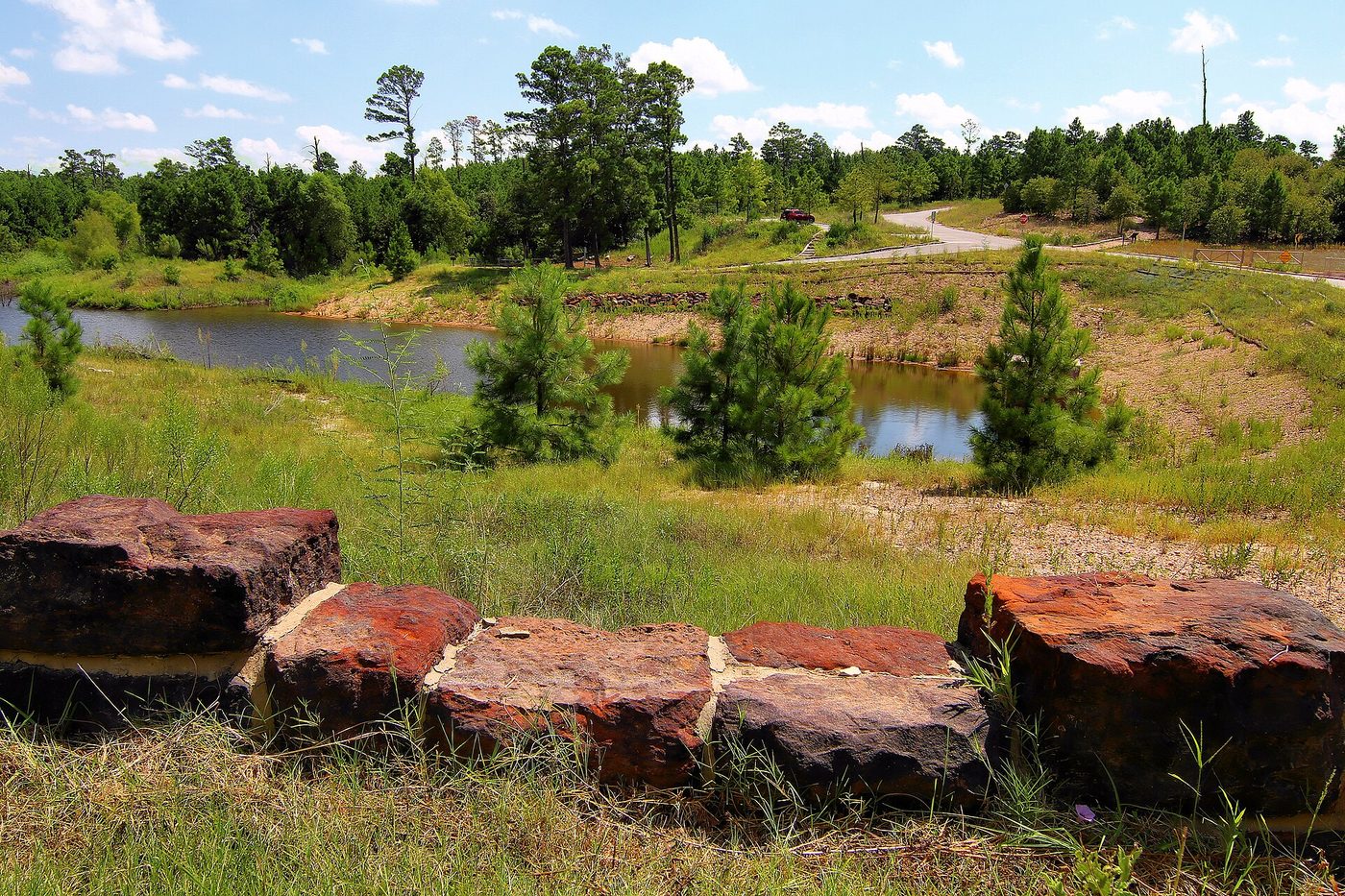
As you come into the outer edges of the Austin area, the landscape changes into rolling live oaks and stands of longleaf and loblolly pines. Bastrop State Park is the classic piney leg-stretch before the city: short trails, quiet lakes, and shaded picnic areas that are a relief after highway miles. The park sits on an ancient sand sheet that supports a rare pine ecosystem — it feels different from the surrounding pastureland and is a good reminder that you left the coastal plain behind.
We usually do a 30- to 45-minute loop on the park trails: short enough to feel like a proper break, long enough to burn the wiggles out of restless travelers. There are also a couple of scenic overlooks and a small lake where kids can watch fish. If the timing works, the park is a nicer place to eat a takeout sandwich than a highway rest area, and it sets you up for the last stretch into Austin with fresher air and less road fatigue.
Why we put it last: it’s very close to Austin, so it makes for a final, calming stop before the city. It’s also a noticeable change of scenery — pine forest instead of flat farmland — which helps reset you after long highway sitting. On busy holiday weekends the park can be crowded, so if your trip is in a holiday slot consider leaving an earlier stop a little shorter and arriving before noon.
Arriving at Austin
Austin unfolds differently depending on which route you take. From TX-71 and Bastrop you roll in from the southeast and hit the city near the Austin-Bergstrom airport and the 183/71 corridors. From US-290 you come down through Manor and approach from the northeast and east; in either case the last 10–20 miles can be slow if you hit evening rush or a University of Texas event. If your plan is to park downtown, expect limited street parking and plan for a garage. If you’re headed to a specific neighborhood — South Congress, East Austin, or the airport — pin the destination and allow a little extra time for traffic and the always-present Austin construction detours.
Austin rewards late arrivals: an evening in town is rich with options — food trucks, barbecue, live music rooms, and riverfront parks. If you arrive before sunset, a walk along Lady Bird Lake or a quick pause on South Congress Avenue is a great way to cap the trip. If you arrive later, aim for dinner at a straightforward place and save the wandering for the next day.
How we would time it
Leave Houston by 8:00 a.m. to avoid the heaviest metro rush. Grab coffee in the city and be on US-290 or I-10 by 8:15. Reach Blue Bell Creameries in Brenham around 9:30 — 9:45 for a quick scoop and a walk on the square. Back on the road by 10:30 and at Washington-on-the-Brazos around 11:15 for a short museum visit and river walk. If you want lunch in Brenham, do it there after the creamery stop and shift Washington-on-the-Brazos to early afternoon. Leave Washington by 12:30–1:00 and aim for Bastrop State Park by mid-afternoon for a final stretch, arriving in Austin in the late afternoon or early evening, well before the worst of evening congestion.
If you are doing the drive in reverse (Austin to Houston), shift the timing to leave Austin in the morning and hit Brenham late morning for the creamery and market before continuing east toward Houston to miss Austin evening traffic.
Booking the rest of it
For most people this is a round-trip drive from Houston. If you need a rental, compare EconomyBookings and GetRentacar for one-way options, deals and vehicle variety. Lodging in Austin fills early for big events (SXSW, ACL weekend, UT football weekends), so if your trip lines up with a festival or game, book your room before you plan the rest of the day. If you want to overnight outside the city, Bastrop and Brenham both have small inns and B&Bs that make for a relaxed night after the drive.
The three stops on a map
Stops in driving order. Map data © OpenStreetMap contributors.
How far is Houston to Austin and how long does it take?
About 165 miles and roughly 2 hr 45 min of driving under clear conditions. Expect longer during Houston or Austin rush hours and on holiday weekends.
Which is the more scenic route: US-290 or TX-71/I-10?
US-290 through Brenham is more rural and scenic, especially in spring when bluebonnets are out; the I-10 to TX-71 route is more highway-forward and can be steadier and sometimes faster when 290 is congested.
Is the Blue Bell Creamery open to visitors?
Blue Bell in Brenham maintains a visitor area and country store; hours and sample policies change seasonally so check before you go if you need tour reservations or have a tight schedule.
Are these stops good for children and dogs?
Yes. Blue Bell and downtown Brenham are family-friendly; Washington-on-the-Brazos has open grounds where dogs on short leashes are often allowed (check site rules), and Bastrop State Park allows dogs on leash but not on all trails. Always confirm site pet policies before traveling.
Where should I fill gas between Houston and Austin?
There are regular gas stations through Cypress, Hempstead, Brenham and La Grange; Brenham and the towns near US-290 are the most convenient last larger-service stops before the Hill Country. If you are taking the TX-71 approach, fuel up in La Grange or Bastrop before the final leg.
Now let us do this for your drive
Every stop above is one we would take ourselves — but it is our day, not yours. Change the departure time, the driving limit, the dog in the back seat, the EV that needs a charger every 200 miles, and the right stops change with it. That is the whole thing we built: you tell us the trip, we name the three good stops, with the drive math already done.
Leaving from somewhere else? Change the start and see your stops right now — your first trip is free, no signup.
Seeing your stops is free. The full plan — clock times, weather, what is open when you arrive — is free for your first trip, then 99¢ for three trips or $2.99 a month. If you just want to browse, we have stop-by-stop pages for thousands of routes.
More road trip guides
- Houston to San Antonio
- Austin to San Antonio
- Dallas to Austin
- Chicago to Door County
- Los Angeles to Santa Barbara
- Salt Lake City to Yellowstone
- All road trip guides
We write one new drive a week — three real towns, the drive math, what we would skip. Leave an email and we will send them as they go up. No more than one a week, unsubscribe in a click.
Updated 2026-11-06. Some links on this page are affiliate links. If you book through one, we may earn a small commission at no extra cost to you. It never changes which stops we pick — no business on this page paid to be here.