Atlanta to Savannah: Three Good Stops Across the Whole of Georgia
Leaving from somewhere else? Change the start and see your stops right now — free, no signup.
About 250 miles from downtown Atlanta to the squares of Savannah, and most of it is the long, straight pine corridor of I-16 that people grit their teeth through. Here is where we get out: the town where Fried Green Tomatoes was filmed, an earth lodge whose floor is a thousand years old, and a World War II bomber museum one exit short of the city.
- 250 miles direct · about 265 with the Juliette detour
- 3 hr 45 min driving · 4 hr 15 min with the detour
- I-75 S · I-16 E · one exit of I-95
- Piedmont to the coast — the Fall Line runs right through Macon
The drive comes in two very different halves. The first 85 miles are I-75 south out of Atlanta, and the only thing that matters is when you leave: the stretch through the southern suburbs past the airport and McDonough can be slow any weekday morning and much of Friday afternoon. Once you clear Locust Grove it opens up into the rolling red-clay hills of middle Georgia, and by Forsyth you are in farm country.
At Macon you pick up I-16, and the second half begins: about 165 miles almost due east across the coastal plain, flat and lined with pines, with small towns set well back from the exits. It is an easy road and a boring one. The honest advice is to do your stopping before it and at the very end of it. Dublin, a little past the halfway mark, is the best place for gas and a restroom in the middle; after that, services thin out until you reach Pooler.
I-16 ends in downtown Savannah itself, dropping you onto Montgomery Street a few blocks from the historic district. There is no bypass and no tangle of interchanges — the interstate simply runs out at the edge of the old city.
Stop 1 — Juliette and the Whistle Stop Cafe
Mile 65 · about 15 minutes east of I-75 · 1 hour
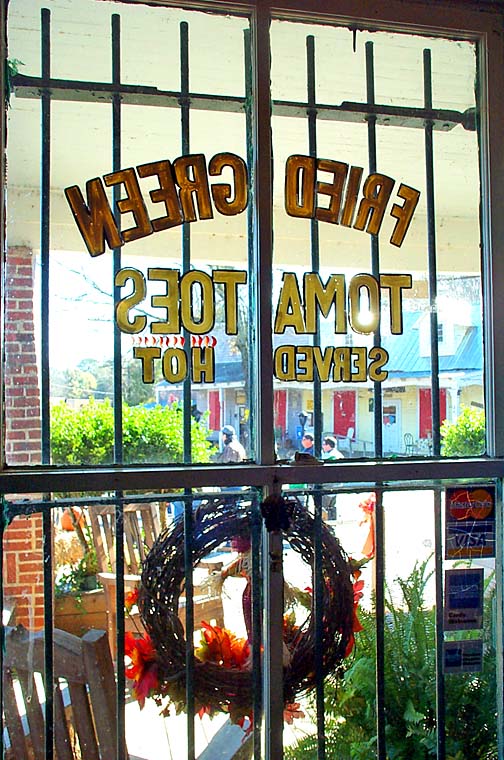
Leave I-75 at Forsyth and follow the signs east through the hills to Juliette, a railroad village on the west bank of the Ocmulgee River with a population of fewer than three hundred. In 1991 a film crew came to town and turned its sleepy main street into Whistle Stop, Alabama, for Fried Green Tomatoes. When they left, the town kept the sets. The old storefronts along the railroad tracks became shops, and the building that played the cafe became a real one.
The Whistle Stop Cafe serves exactly what you think it does: fried green tomatoes, hot, plus a plate-lunch menu of Southern cooking. Get a table, then walk the short strip of porches and shops and look at the old dam and mill on the river. It is a small place and a quiet one, and that is the point — an hour here resets you before the long run east. Check hours before you go; like a lot of small-town cafes it keeps short ones.
If you have an extra hour: Jarrell Plantation State Historic Site sits a few miles away across the river. The Jarrell family farmed the land for more than 140 years, and the site keeps their buildings as they left them, including the story of the enslaved people who worked it. From Juliette, US-23 runs south into Macon, so you do not need to double back to the interstate.
Stop 2 — Ocmulgee Mounds National Historical Park, Macon
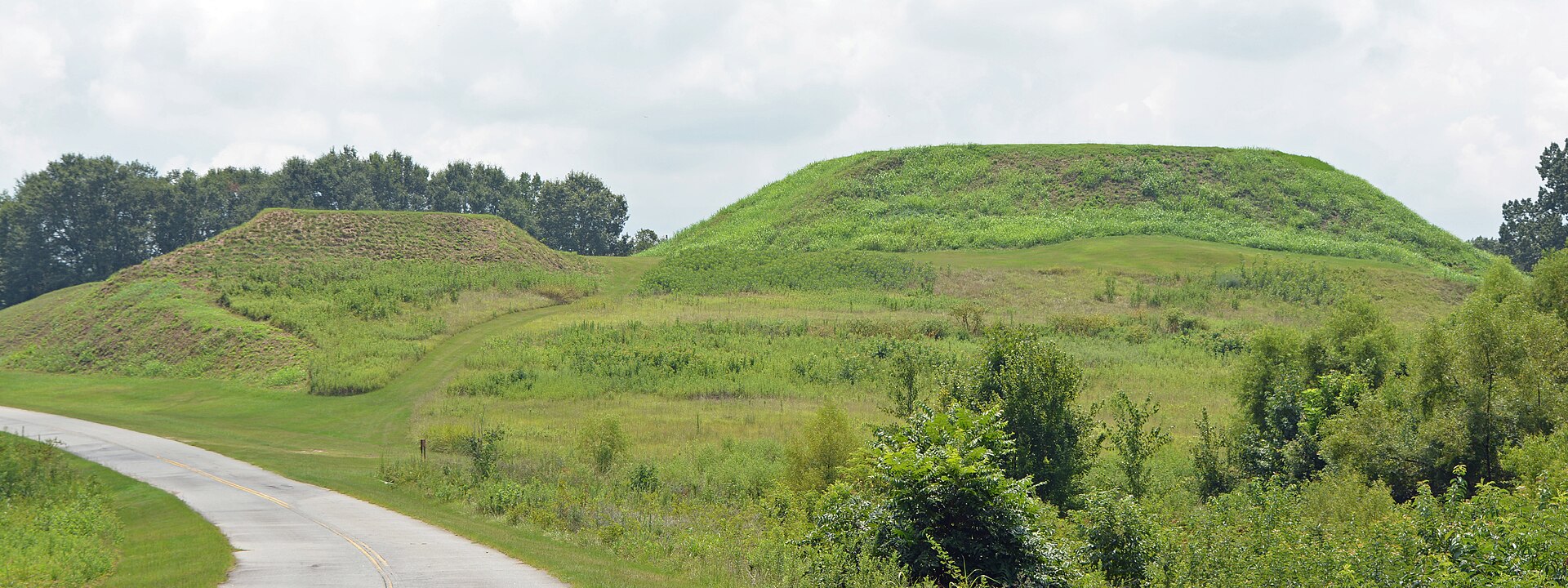
Mile 85 · 2 minutes off I-16 · 1 to 1.5 hours
Just east of downtown Macon, on a bluff above the Ocmulgee River, people built a town of earthen mounds more than a thousand years ago. The largest, the Great Temple Mound, rises about 55 feet — raised one basketload of earth at a time by thousands of workers around 1000 CE. The site sits on the Fall Line, where the hills of the Piedmont meet the flat coastal plain you are about to cross, and it shows evidence of some twelve thousand years of human life.
Start at the visitor center museum, then walk into the Earth Lodge. You go in through a low tunnel to a round council chamber with a clay floor carbon-dated to around 1050 CE, and a raised platform shaped like an eagle with molded seats for the town's leaders. It is one of the most remarkable rooms in the South, and it is a few hundred yards from an interstate. Then walk or drive out to the Great Temple Mound and climb the stairs to the top for a view across the river and the Macon skyline.
Entry to the park is free. It was a national monument for decades and was upgraded to a national historical park in 2019, which is why older maps and signs still call it Ocmulgee National Monument. After you leave, you are back on I-16 in two minutes — and Macon's downtown, ten minutes away, is the last good choice for lunch before the coast.
Tell us where you are leaving from, when, and who is in the car — dog, toddler, EV, six-hour limit — and we will name the stops that actually fit. Your first trip is free, no card.
Stop 3 — National Museum of the Mighty Eighth Air Force, Pooler
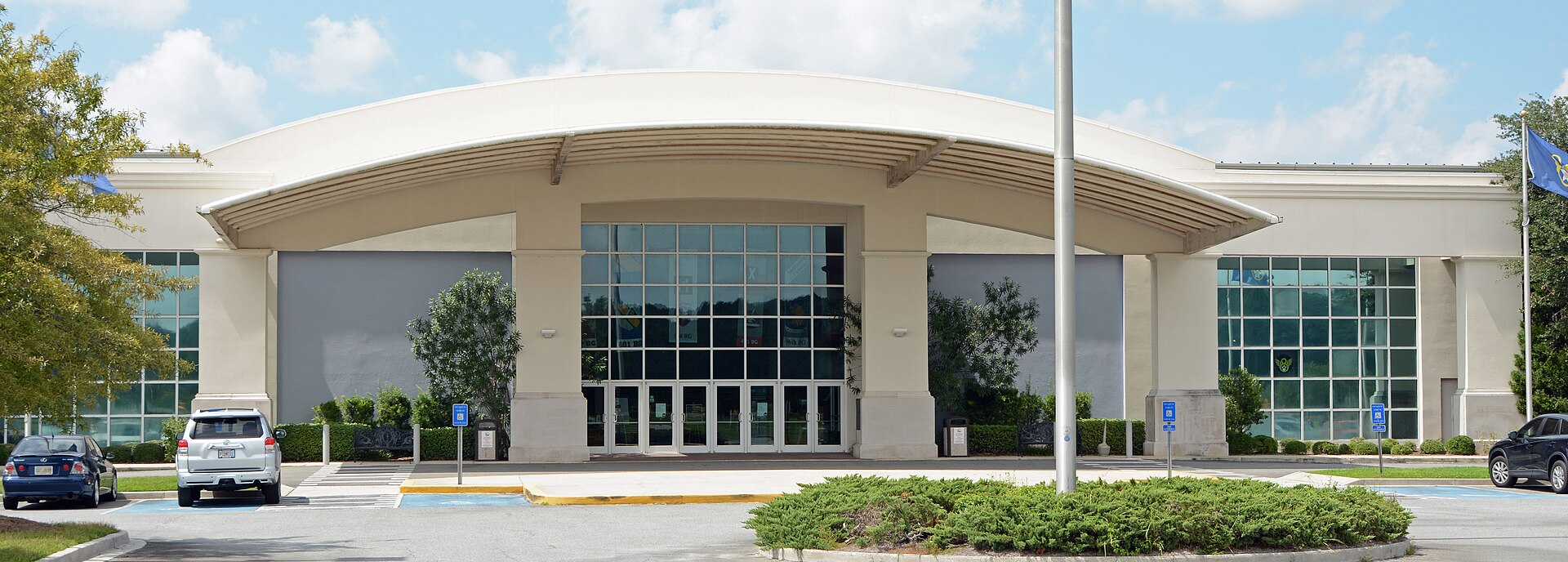
Mile 240 · one exit up I-95 · 1.5 to 2 hours
The Eighth Air Force was activated in Savannah in 1942 before it went to England to fly the daylight bombing campaign over Europe, and the museum dedicated to it stands in Pooler, fifteen minutes short of downtown. Where I-16 meets I-95, take I-95 north one exit to exit 102 and the museum is right there.
The centerpiece is a B-17 Flying Fortress you can see up close in its own hall, surrounded by the flight gear, letters and stories of the young crews who flew it. Outside stand Cold War jets including a B-47 Stratojet, a MiG-17 and an F-4 Phantom. The museum opened in 1996 and has kept growing — it recently broke ground on a large new wing — and it is the kind of place where visitors who planned to stay forty minutes end up reading every panel. There is a modest admission charge, a restaurant inside, and a quiet memorial garden out back.
Why we put it last: it is the perfect end to the long I-16 run, and it keeps you out of Savannah's streets until late afternoon, when the day-trippers start to thin out.
Arriving in Savannah
Savannah's historic district is laid out on the plan James Oglethorpe drew in 1733: a grid of streets broken up by 22 leafy squares, running south from the river to Forsyth Park and its white fountain. It is best seen on foot. Park once — the city garages are simpler than hunting for a metered street space — and walk. River Street, down the old stone ramps from Bay Street, is the busy waterfront; the squares a few blocks south are where the city is at its best. For trolley, river and ghost tours, book Savannah trolley, ghost and river tours ahead; for a walking story you can do at your own pace, there is a self-guided audio walk through the squares.
How we would time it
Leave Atlanta by 8:30, after the worst of the southbound rush. Juliette by 9:45 — an early lunch of fried green tomatoes at the Whistle Stop around 11. Ocmulgee Mounds from noon to 1:30. Gas in Dublin around 2:30, then straight across to the Mighty Eighth at 4. Downtown Savannah by 5:45, check in, and walk to a square for dinner in the evening light.
Booking the rest of it
If you are flying in, Atlanta's airport has far more flights and rental cars than Savannah's, and one-way rentals between the two are common. Compare EconomyBookings and GetRentacar. Once you are in Savannah you will barely use the car, so pick a hotel with parking in or near the historic district and leave it there.
The three stops on a map
Stops in driving order. Map data © OpenStreetMap contributors.
How far is Atlanta to Savannah and how long does it take?
About 250 miles and 3 hr 45 min of driving on I-75 south to Macon and I-16 east, which ends in downtown Savannah. Adding the detour to Juliette makes it about 265 miles and 4 hr 15 min.
What are the best stops between Atlanta and Savannah?
Juliette, the village where Fried Green Tomatoes was filmed, with the real Whistle Stop Cafe, about 15 minutes off I-75 at Forsyth; Ocmulgee Mounds National Historical Park in Macon at mile 85, with a thousand-year-old earth lodge; and the National Museum of the Mighty Eighth Air Force in Pooler, one exit up I-95.
Where should you stop for gas on I-16 to Savannah?
Fill up in Macon, and again in Dublin, a little past the halfway point. The long stretch of I-16 across the coastal plain has fewer services, and exits are set well back from the towns.
Is the Whistle Stop Cafe in Fried Green Tomatoes real?
Yes. The film was shot in Juliette, Georgia, in 1991, and the building that played the cafe became a working restaurant serving fried green tomatoes. It keeps small-town hours, so check before you go.
Is Ocmulgee Mounds free to visit?
Yes. Entry to Ocmulgee Mounds National Historical Park, including the museum and the reconstructed Earth Lodge, is free.
Now let us do this for your drive
Every stop above is one we would take ourselves — but it is our day, not yours. Change the departure time, the driving limit, the dog in the back seat, the EV that needs a charger every 200 miles, and the right stops change with it. That is the whole thing we built: you tell us the trip, we name the three good stops, with the drive math already done.
Leaving from somewhere else? Change the start and see your stops right now — free, no signup.
Seeing your stops is free. The full plan — clock times, weather, what is open when you arrive — is free for your first trip, then 99¢ for three trips or $2.99 a month. If you just want to browse, we have stop-by-stop pages for thousands of routes.
We write one new drive a week — three real towns, the drive math, what we would skip. Leave an email and we will send them as they go up. No more than one a week, unsubscribe in a click.
Updated 2026-09-28. Some links on this page are affiliate links. If you book through one, we may earn a small commission at no extra cost to you. It never changes which stops we pick — no business on this page paid to be here.